Centreville District
This is an area difficult to describe graphically, as to where it starts, finishes, or what people to associate with it. One must assume the school district would include most of the people who claimed to have lived in this community. Some of them called Holland their town, others Treherne. The main activities centered around the school.
The spiritual needs of this community were also divided, as west of the school attend Holland churches, while east and north went to Bethel Church. After Bethel closed in the mid twenties, Sunday School was held in the church.
Around 1931, the community started to have dances in the school which continued until the start of the war. The dances were a source of joy for the community during the depression, when everyone had to make their own fun with little money.
In 1935, the dancing committee installed a hardwood floor in the school which made dancing more enjoyable. Dancers from other districts often journeyed to Centreville on a Friday night for a few hours of fun.
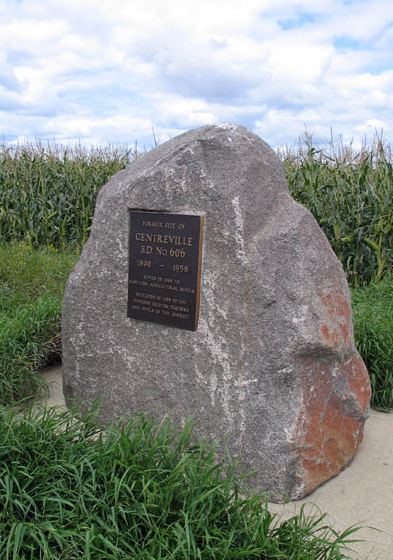
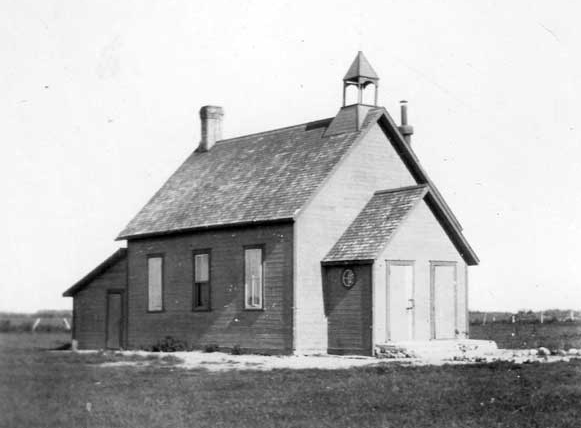
In 1889, Centreville district residents organized to form a board of trustees and gained permission to build a school. By 1890, the school was finished at a cost of $600.00 and was called Centreville No. 606 because it was built between Treherne and Holland. The first teacher at the new school was Thomas Knechtel and was paid a monthly salary of $40.00.
In 1900, the school building was moved 15 feet west and placed on a surface foundation and the interior of the school was refinished. In 1907 the first flag pole was erected and in 1916 a wood shed was built on the west side of the school. Improvements where constantly being made such as a basement and lavatories in 1930 as well as hydro and an oil furnace in 1953.
In 1958 the district was dissolved and half the area went to the Holland School and the other went to Treherne.
Centreville School was purchased by the Agricultural Museum at Austin. It was moved there to be on display as one of the oldest one room schools in Manitoba.